


Grok 4 vs ChatGPT-4o vs Claude 3.5 – Honest Comparison After Heavy Use

Malek Z.
- February 12, 2026
- 5 Min Read
I have been using AI tools daily for writing, coding small scripts, brainstorming ideas, and researching client projects for a couple of years now. When Grok 4 dropped I decided to put it head to head with the ones I already rely on. ChatGPT-4o has been my go-to for a while and Claude 3.5 Sonnet still impresses me on certain tasks. I spent a solid few weeks switching between all three on real work. No cherry-picked easy prompts. Just the usual grind of articles, code tweaks, and problem solving.
This is not another benchmark chart dump. These are my actual experiences when the tools had to deliver under normal pressure.
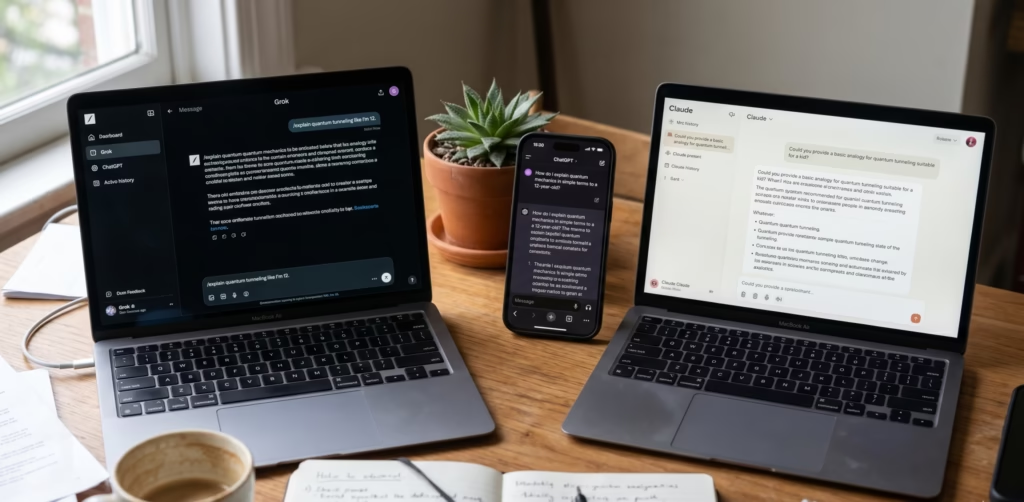
How I Actually Tested Them
I used each model for similar tasks over several weeks. I wrote blog drafts, debugged simple Python scripts, analyzed documents, brainstormed content ideas, and even handled some creative storytelling bits. I paid attention to speed, how natural the output felt, how often I had to edit, and whether it actually saved me time or just created more work.
I also threw in some trickier stuff like summarizing long reports and reasoning through project planning. Costs factored in too since I was using paid access across the board.
What struck me early on is that they all do a decent job but shine in different spots. The hype around any single one being the absolute best did not fully match reality once I lived with them.
Grok 4 feels bold and direct. It pulls real-time info from X and searches smoothly which helped on current events or trending topics. I was working on a piece about recent tech shifts and it grabbed fresh context without me leaving the chat. On math or science-heavy reasoning it often gave solid breakdowns. One afternoon I asked it to walk through a complex probability question and it handled the steps clearly with fewer hallucinations than I expected from earlier versions.
But it sometimes goes off on tangents or adds a bit of that signature witty edge even when I wanted straight answers. For pure writing tasks I found myself editing more to tone down the personality. Access is tied to X Premium+ or SuperGrok which might not fit everyone’s budget.
ChatGPT-4o remains the most well-rounded for everyday use. The voice mode is still handy for quick brainstorming while I am out walking or driving. It handles multimodal stuff nicely. I uploaded images of charts a few times and it described them accurately enough to pull insights from.
For general writing and content creation it gives balanced outputs that need moderate editing. One client project involved generating email sequences and it kept the professional tone without much prodding. Speed is reliable and the interface feels polished after all this time. The memory feature across chats is useful when working on ongoing projects.
The downsides show up on very long context or deeply specialized coding where it sometimes feels a step behind the latest from others. But for most solo workers it is still a safe all-purpose choice.
Claude 3.5 Sonnet consistently delivered the cleanest writing and coding help in my tests. When I fed it a messy script to debug it spotted issues fast and suggested fixes that actually worked with minimal back and forth. For long-form content it produces thoughtful, natural-sounding drafts that require less heavy rewriting than the others.
The artifacts feature is nice for building simple prototypes or organized outputs. It feels careful and less likely to make stuff up on factual questions. I used it a lot for summarizing dense PDFs and the results read like something a human colleague would hand over.
Rate limits hit harder during intense days though. And it can be overly cautious on some creative or edgy topics which slowed me down once or twice.
Where Each One Stood Out
After switching between them the patterns became clear. Grok 4 impressed me on reasoning tasks that needed current data or a bit of outside knowledge. It felt quick to adapt and less censored which was refreshing for open discussions. But for polished client-facing work I leaned back on the others.
ChatGPT-4o won for versatility. It rarely frustrated me and the ecosystem around it with custom GPTs and integrations makes it easy to build little workflows. Voice and image features came in handy more times than I expected.
Claude 3.5 Sonnet took the lead for actual writing and coding quality. The outputs often felt closest to what I would produce after a few revisions. It helped me ship cleaner first drafts which saved real hours over the weeks.
No clear overall winner though. I ended up keeping all three open in different tabs depending on the job. Grok for quick research, Claude for deep work, and 4o for general tasks and voice chats.
Final Verdict
After heavy use my main rotation is Claude for writing heavy days, ChatGPT-4o for most everything else, and Grok 4 when I need fresh perspectives or current context. They are all capable but none replaced my own judgment. The real wins came from using them as smart assistants rather than full replacements.
AI tools keep getting better fast. What matters most is finding the mix that fits how you actually work. If you are spending hours stuck on drafts or debugging these can definitely help cut the pain but your experience and final touches are still what make the output connect with people.